
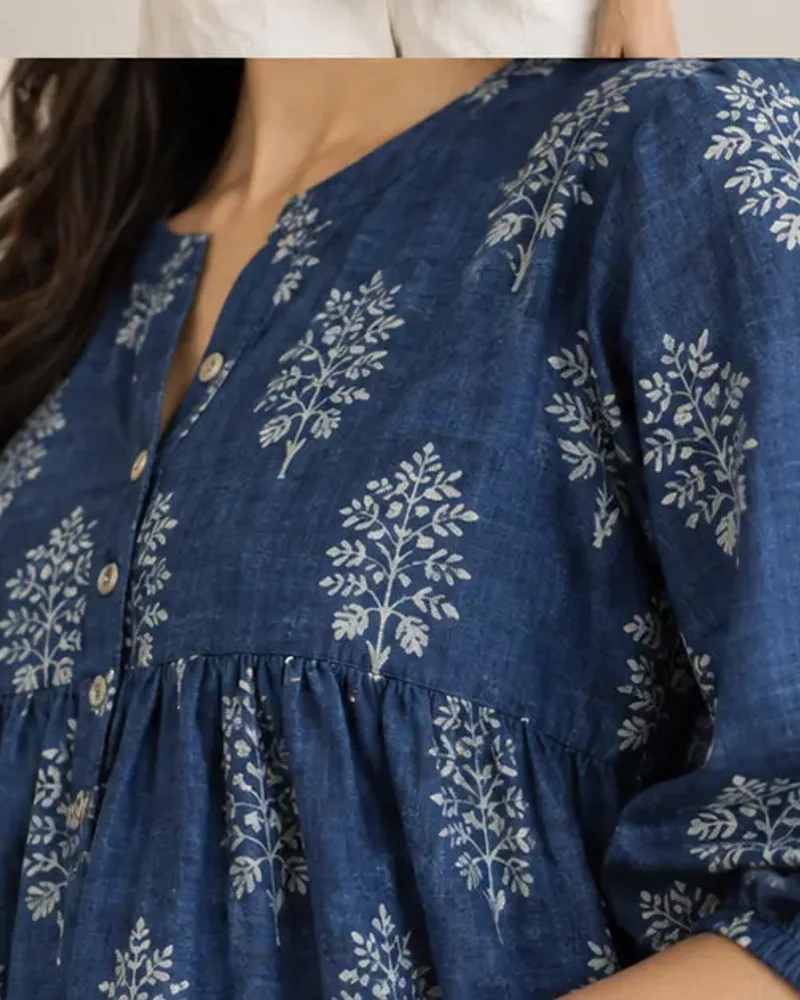
Two garments can both say “100% cotton” and behave completely differently. One may hold a crisp collar; another may pool softly around the body. A useful buying decision begins by separating fibre from fabric behaviour.
Five things to read
Use the light and movement tests
Opacity should be judged in daylight, not only against a dark shop background. Hold a layer up to the light or ask for a photograph against a bright window. Then check the garment while sitting, reaching and walking: tension can make a fabric more transparent than it appears when still.
The best fabric question is not “Is this cotton?” but “How does this cotton behave in this particular cut?”
Ask before you buy
- Is the garment lined? If yes, what is the lining fibre?
- What are the actual garment measurements?
- Does the colour bleed in the first wash?
- Should the piece be hand-washed, machine-washed or dry-cleaned?
- Has the fabric been pre-washed or may it shrink?
- Are small variations expected from the print or craft process?
Care for the behaviour you bought
Use cool water, a mild cleanser and gentle movement unless the confirmed care instructions say otherwise. Dry printed cotton away from harsh direct sun, and store only when fully dry. Press from the reverse when the surface has print, embroidery or mirror work.
Most importantly, follow the care instructions supplied for the exact product. Fabric guidance is useful; product-specific information should decide the final method.
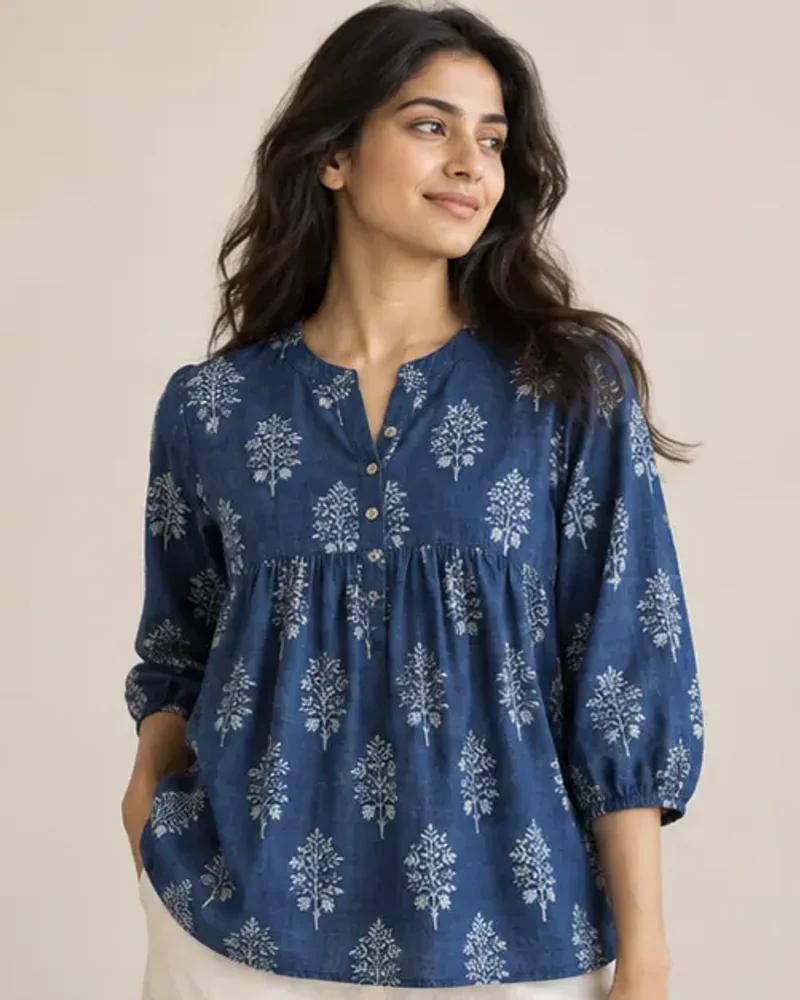
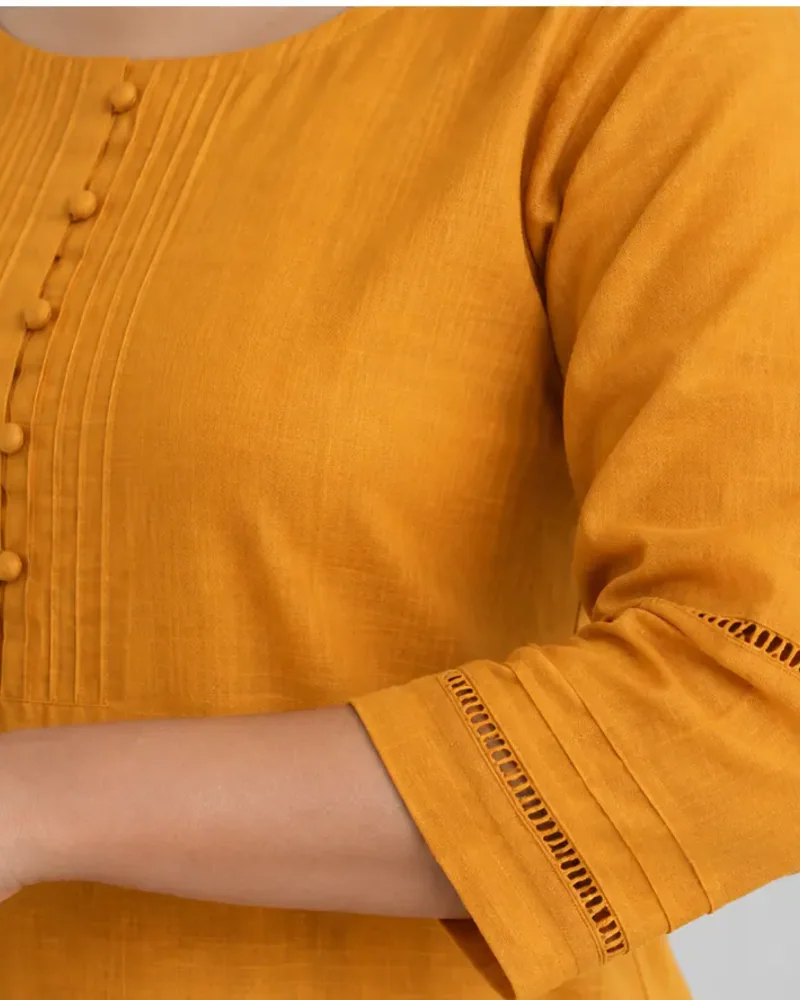
Compare a wide view with a close view
Use the front image to judge proportion and the detail image to inspect print, texture and finishing.
This educational article was prepared with AI assistance and approved for publication by The Suti Story. Confirm fibre, construction, care and fit for the exact product before ordering.