
Suti’s
Fabric School
Fabric facts, told with cotton, colour and a little comic timing.
Open the first question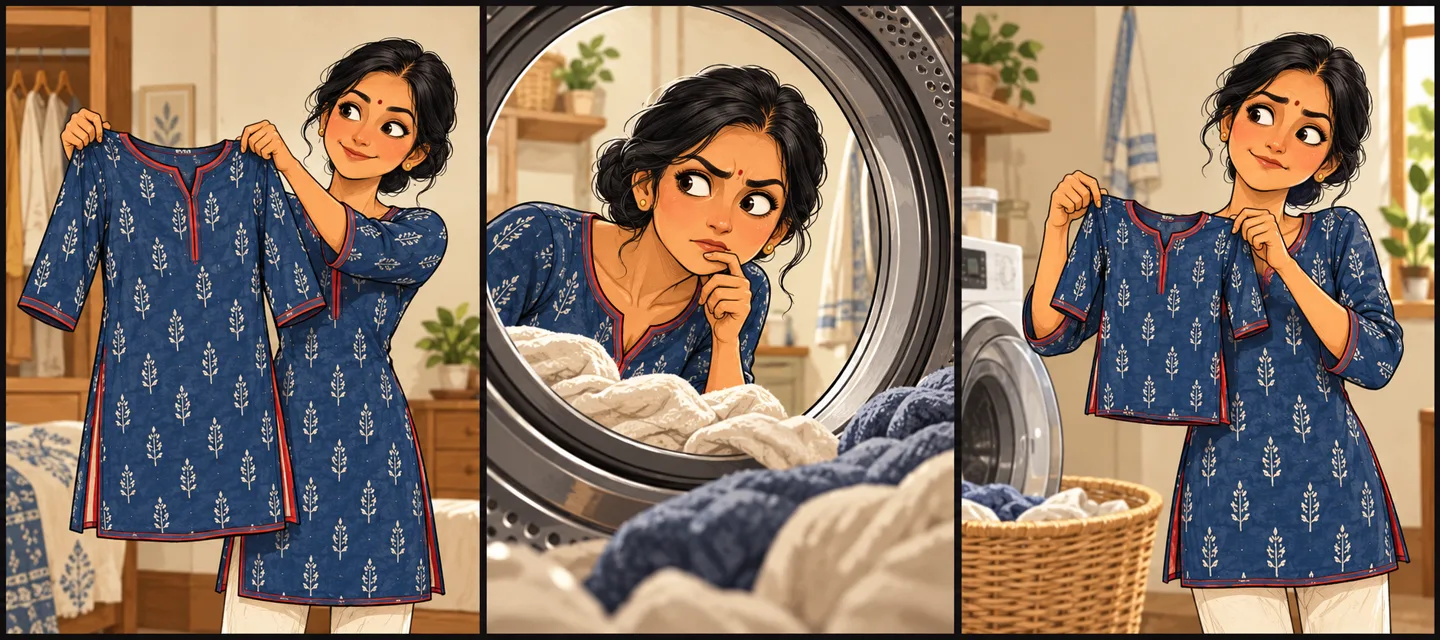
Twelve useful answers
Open a question.
Meet the fabric.
Each answer separates a general textile fact from claims about a particular garment. Always follow the care label on the piece in your hand.
01Why does cotton shrink?+
Water and heat can let tension introduced during spinning, weaving and finishing relax, so the fabric contracts. The amount varies by construction and treatment. Cool washing and air-drying can help limit further shrinkage.
02Is 100% cotton always better?+
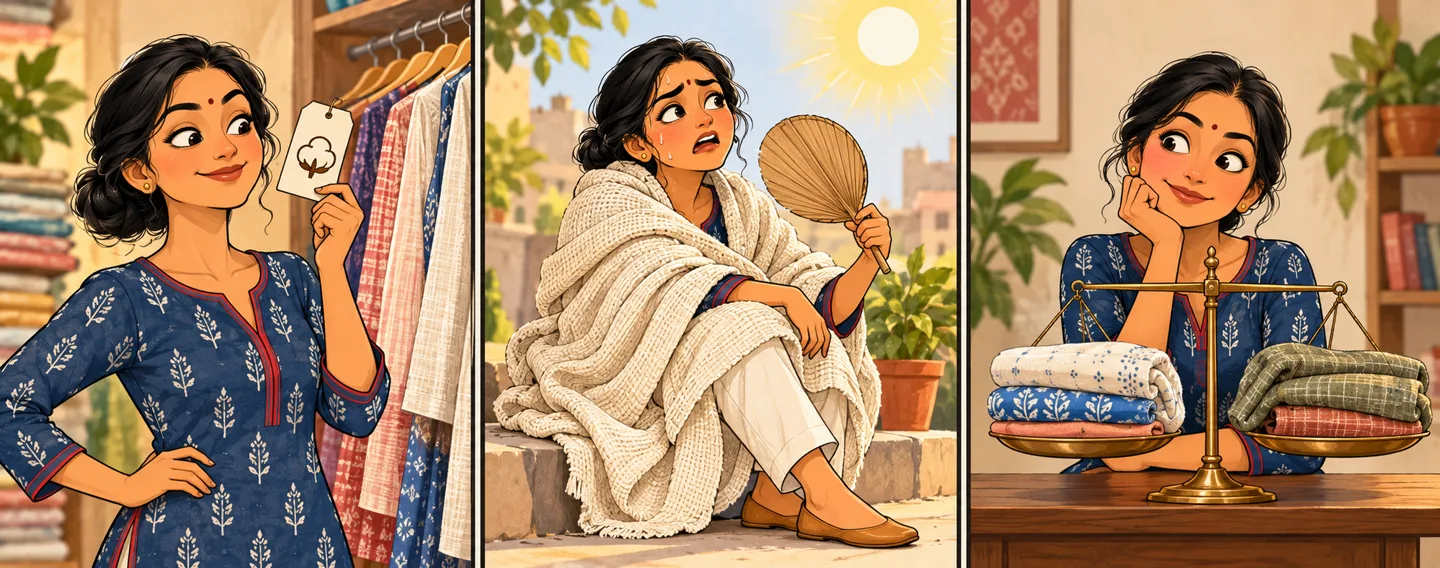
Not automatically. Comfort and performance also depend on fibre quality, yarn, weave, weight, finishing and fit. A thoughtful blend may wrinkle less; pure cotton may offer the hand you prefer. Better means fit for purpose.
03Why is hand-block printing special?+
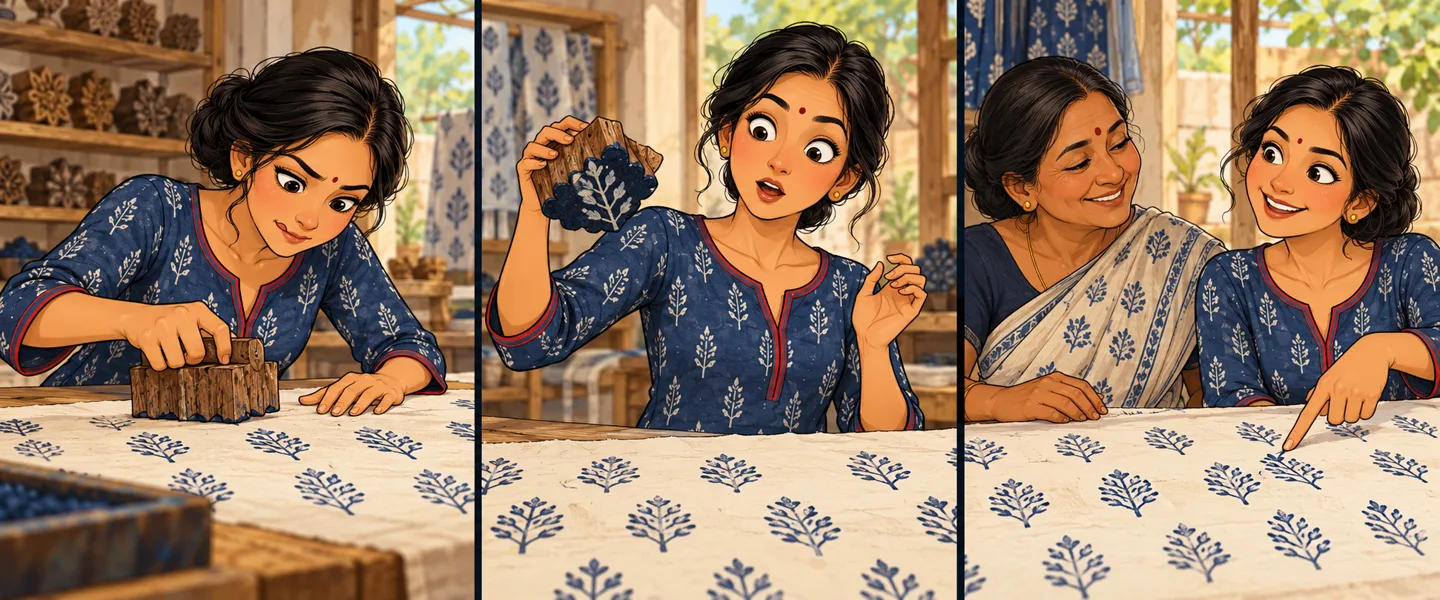
A printer presses carved wooden blocks onto cloth by hand, often building a design one colour at a time. Small shifts in placement and colour are natural signs of the manual process—not automatically faults.
04Why do some cotton clothes feel cooler?+
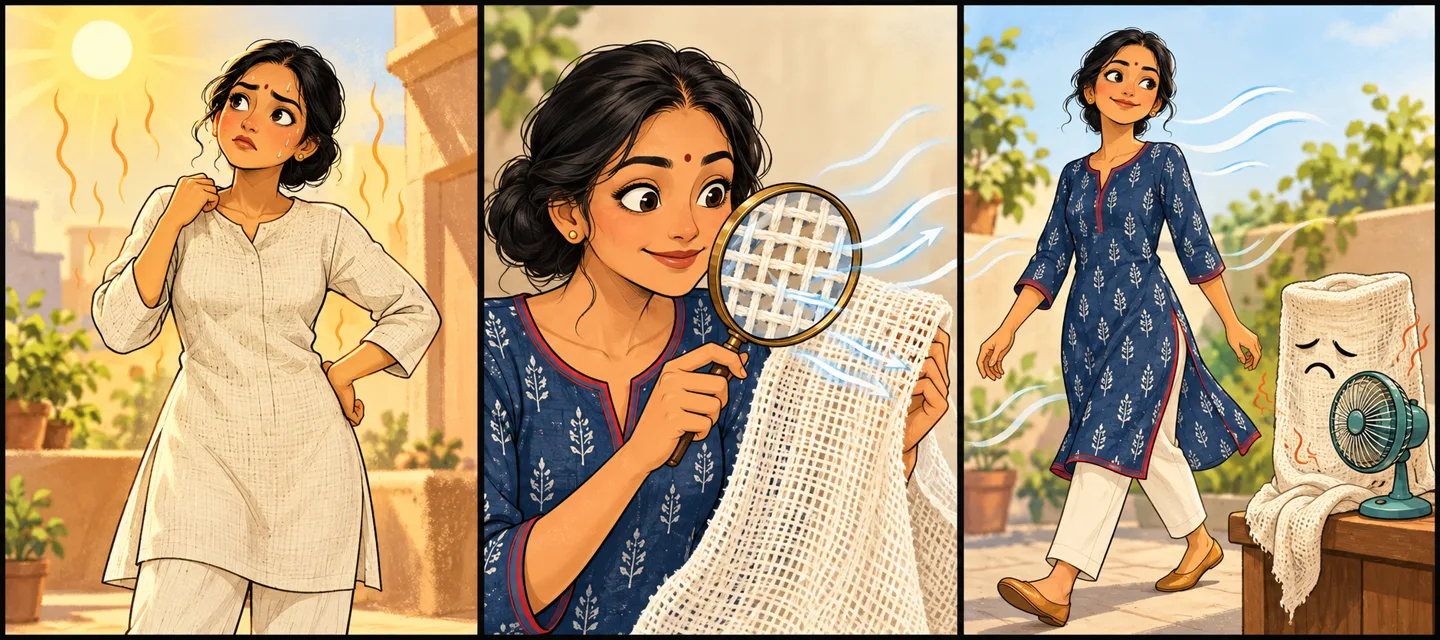
A lighter fabric, more open weave and roomier fit allow more air to move and moisture to escape. A dense or tight cotton can feel warmer. Construction changes comfort.
05Bagru and Ajrakh—what’s the difference?+
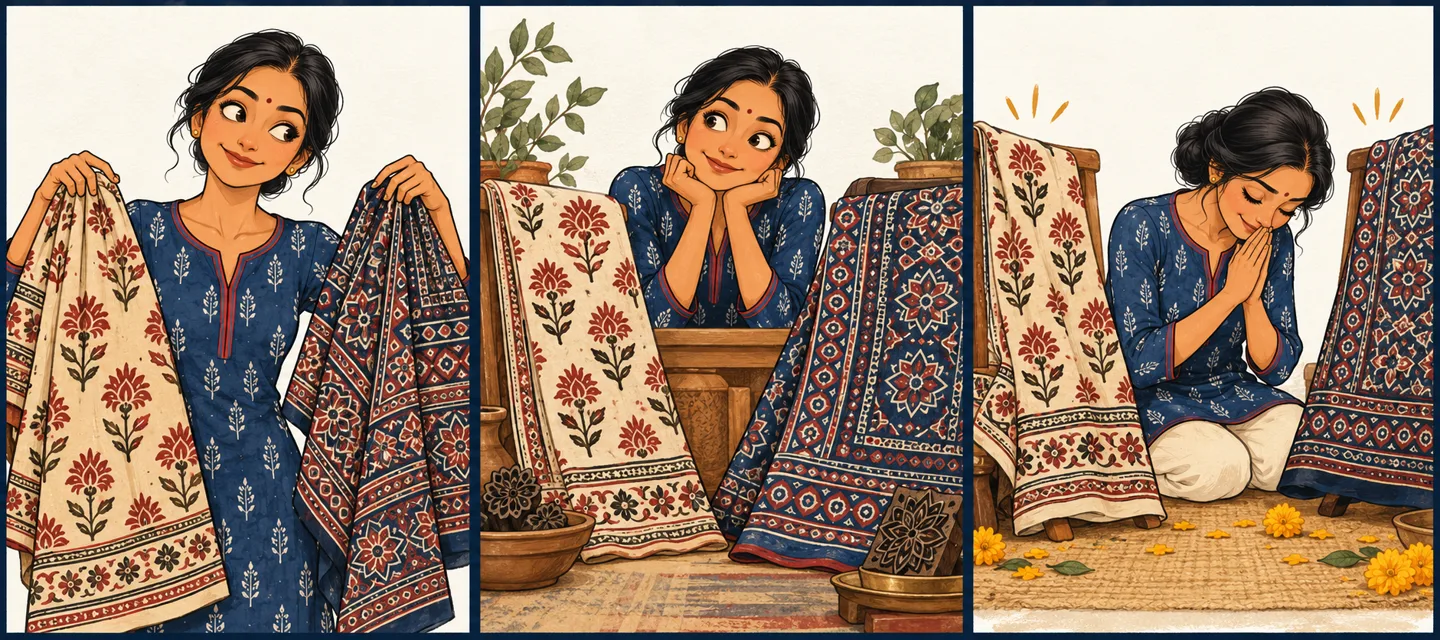
Bagru is a Rajasthan printing tradition associated with earthy palettes and resist or mordant techniques. Ajrakh is a multi-stage resist and mordant tradition associated especially with Kutch and Sindh, often using intricate geometric repeats. Both have regional and artisan variation.
06Why does cotton wrinkle so easily?+
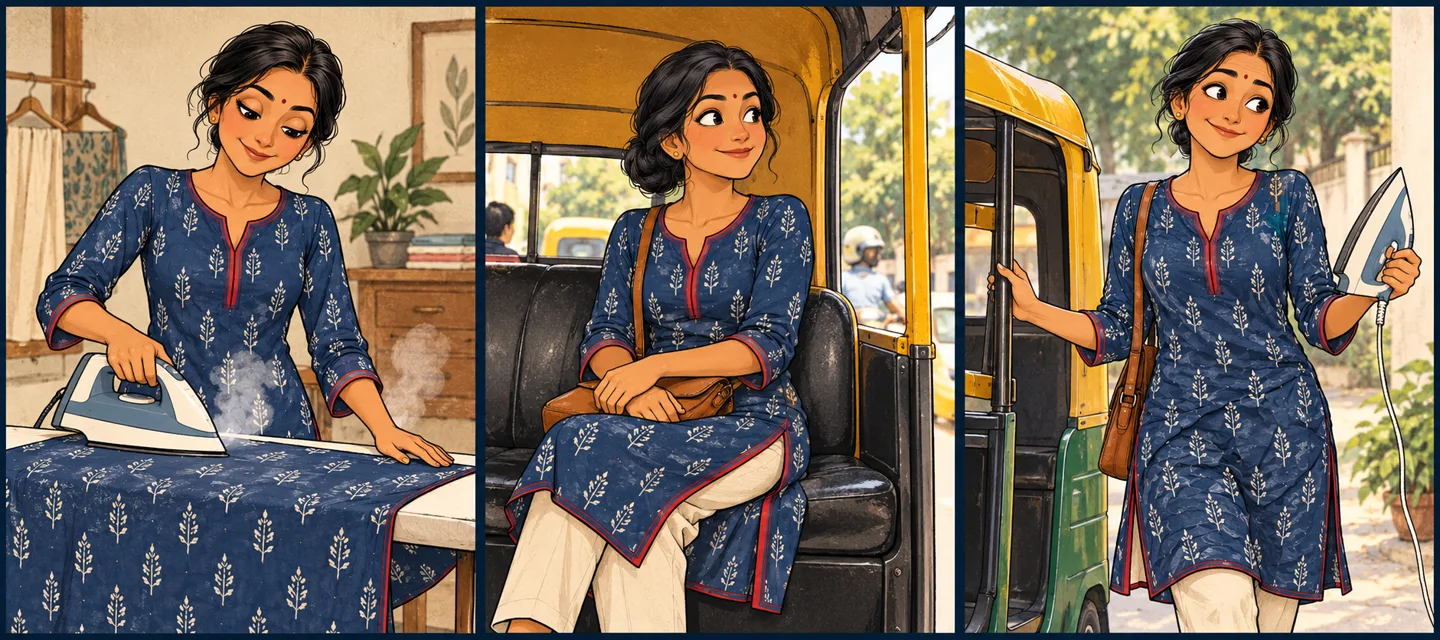
Moisture lets bonds between cotton’s cellulose chains rearrange. When cloth is folded or compressed, new bonds can form in the creased position. Steam or ironing helps reset them.
07Does higher GSM mean better cotton?+
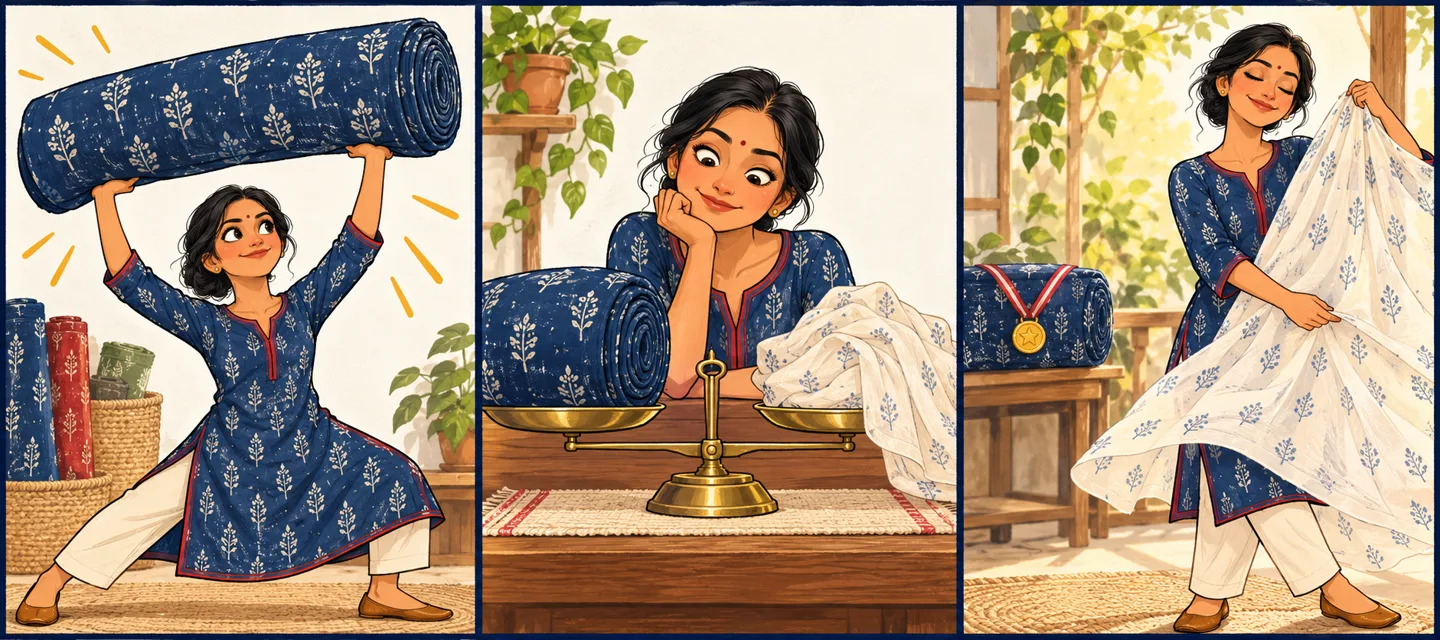
No. GSM means grams per square metre and tells you fabric weight, not overall quality. High GSM can feel substantial; low GSM can suit airy clothing. Fibre, yarn, construction and finishing also matter.
08Why do some prints bleed colour?+
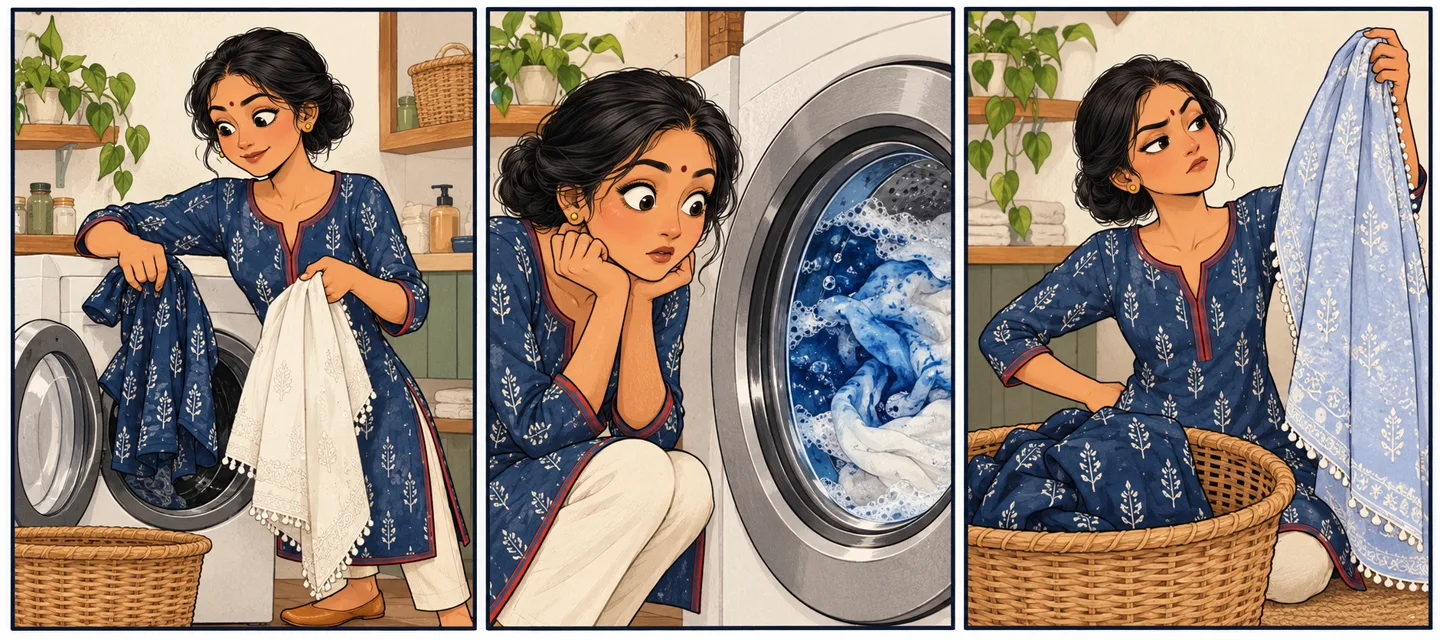
Loose surface dye, or dye that was not fully fixed or washed off, can move into wash water. Colourfastness depends on the dye, fibre, process and after-treatment. Follow the care label and wash strong colours separately at first.
09Is mulmul the same as regular cotton?+
Mulmul is not a different fibre. It is a fine, lightweight, usually plain-woven cotton fabric. Fine yarns and light construction give it a soft, airy hand; other cotton fabrics may be heavier or more structured.
10Is handloom the same as hand-block print?+
No. Handloom describes how fabric is woven. Hand-block printing describes how a surface pattern is applied. A fabric can be handloom, hand-block printed, both—or neither.
11Why do cotton clothes become softer?+
Wearing and washing can remove some surface finishes and loosen or raise tiny surface fibres. Repeated abrasion also wears fibres down, so gentle care helps a favourite last.
12Is expensive cotton always better?+
Price alone cannot prove quality. It may reflect fibre, yarn, construction, finishing, craftsmanship, labour, scale and brand costs. Judge the garment on feel, construction, fit, transparency and suitability—not the tag alone.