
Indigo is often treated as a neutral, but it is not visually silent. Near the face, a dark blue creates contrast. The styling question is whether you want to sharpen that contrast, soften it, or interrupt it with warmth.
Start with the neckline
A collar or high neckline creates a strong indigo frame, so keep earrings narrow or hair pulled back. A V-neck opens the centre and can carry a rounder earring. A square neck already supplies geometry; repeat that structure once, perhaps in a cuff or a neat centre part.
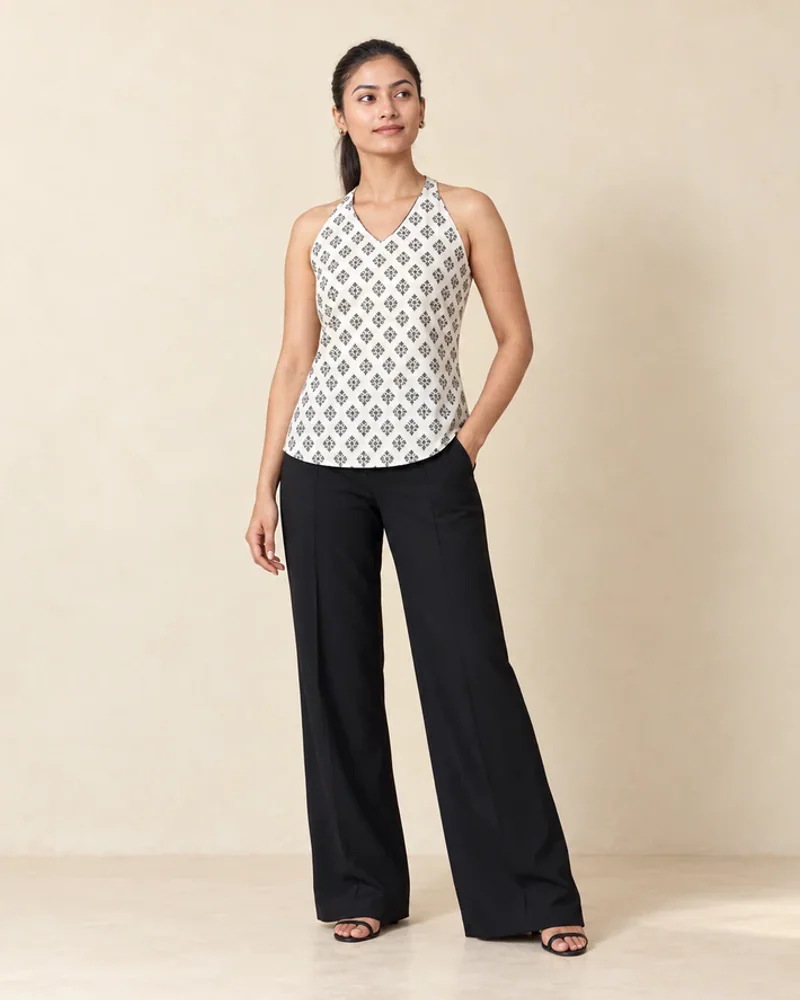
Let skin break the blue
A halter or open neckline gives indigo breathing space. One earring and a softly defined lip are enough.
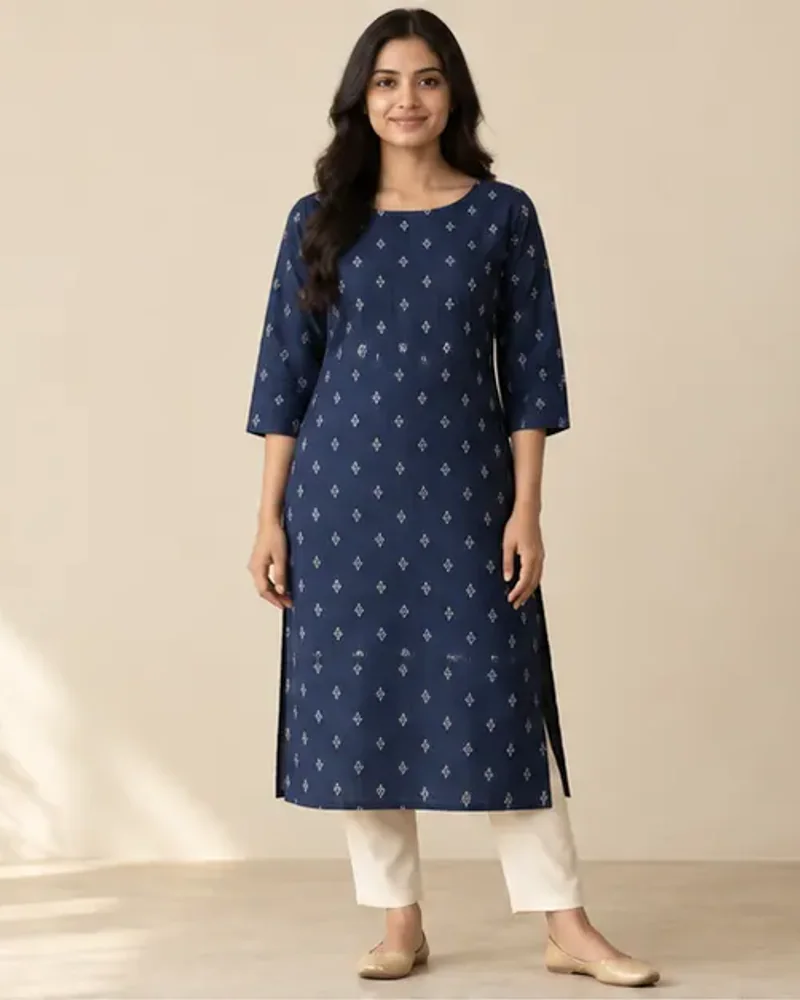
Lift detail upward
With more fabric near the face, use a tidy hairstyle or a slimmer earring so the print remains legible.
Choose metal by mood, not rule
Balance the lip
For a soft look, try muted rose, berry-brown or mauve and keep the edge diffused. For stronger contrast, brick red or a clean red can work—especially when the outfit has a warm motif. The useful test is the whole face in daylight: if the blue makes the skin look flat, add a small amount of warmth through cheek colour or lip tone.
Repeat indigo once
Do not match every accessory. Repeat the blue only once—in a bag detail, bangle, ring or border—then let ivory, tan, rust or metal finish the outfit. One repetition creates coherence; five repetitions look like a uniform.
Indigo can be the anchor without becoming the entire story.
Use a full-length mirror to judge proportion, then a close mirror to judge the conversation between neckline, jewellery, hair and lipstick. If all four compete, remove one.
Indigo across silhouettes
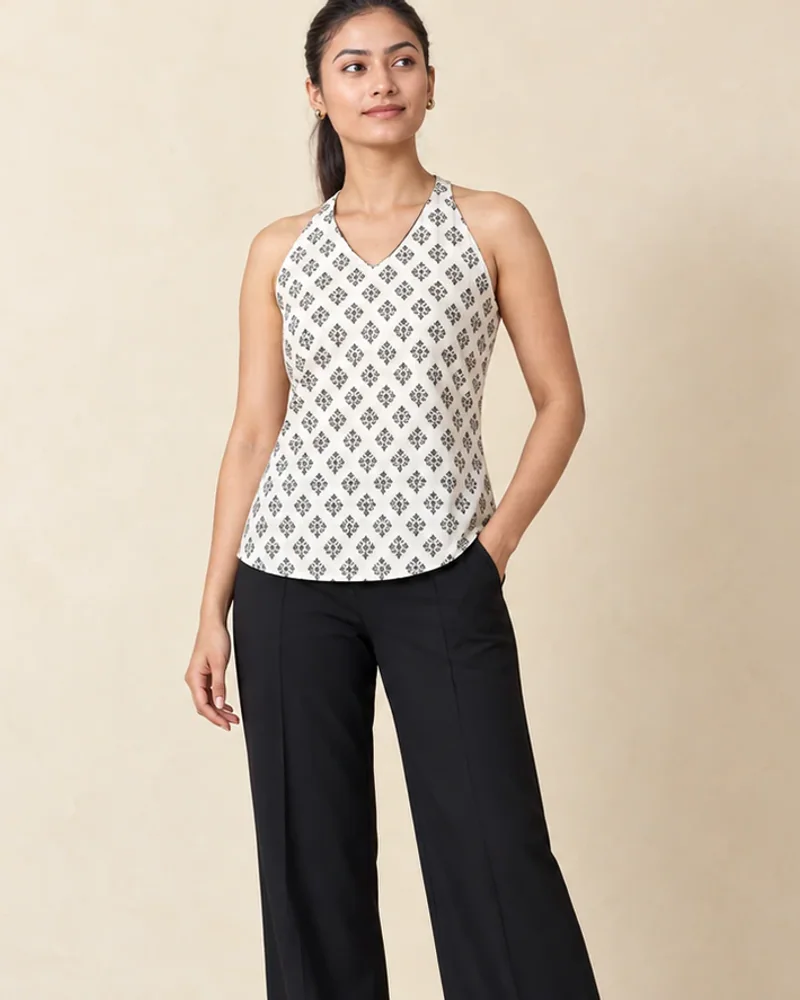
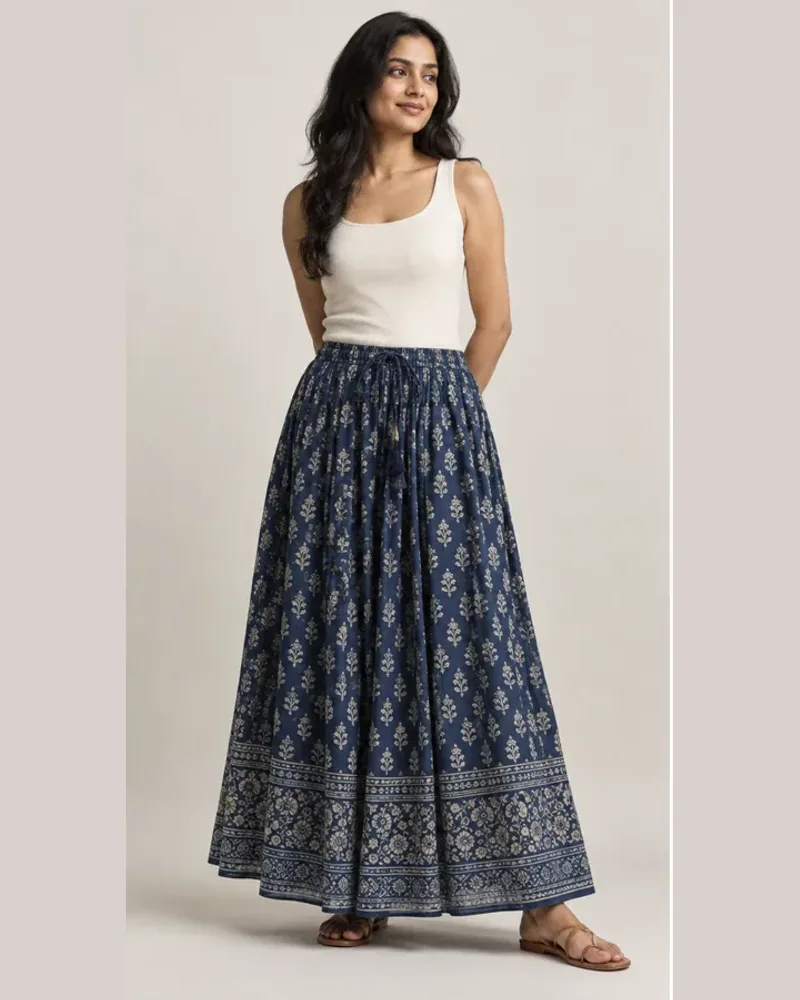
Compare how the same colour changes in a fitted top, a straight kurti and a fluid skirt.
This educational article was prepared with AI assistance and approved for publication by The Suti Story. Colour appearance varies by display and lighting; confirm the exact product before ordering.